Table Of Content

That means the structure may be constructed of materials that are quite old. In general, older homes tend to require more maintenance as components wear out over time. Some buyers prioritize a location that’s within walking distance of the downtown scene or their place of employment. Smaller homes with simpler construction can be easier to maintain, making them a practical choice for first-time homebuyers, retirees, or frequent travelers.
10 Must-Follow Instagram Accounts for Architecture Lovers
The placement separates the house into two distinct living spaces, and you can close the doors to increase privacy. Though designed to be compact and efficient, shotgun houses have distinct design features that allow for instant identification. Aside from the layout, there are specific facades well known to the shotgun house design. In New Orleans, neighborhood and historic preservation organizations often set specific building standards for shotgun house construction.
What Is an Easement in Real Estate? A Guide for Homebuyers
More openings create more light and passageways and larger, more open spaces. The double shotgun consists of two side-by-side single shotgun layouts separated by a wall or a doorway. The double can be two separate single residences or one combined, depending on the interior division. Shotgun houses are typically wood-frame structures sheathed in timber siding, though stone and brick are also common.
Start collecting Stone for your Manor
One thing that really slows down a lot of new players in the early game is that they rely heavily on their one starting Ox to ferry all that Timber to and fro. To do this, just click on your Htiching Post (which you begin the game with), and click the "Order Another Ox" button. It costs 20x Regional Wealth out of your total 50, but it's a worthwhile investment. Plop down 3 Burgage Plots for now, and let your builders work on them for a while. Roads in Manor Lords are completely free and instantly built, so it's always a good idea to build them at the start of the game while paused.
Home Tour: A Private Oasis in a Gillespie Park Shotgun House - Sarasota
Home Tour: A Private Oasis in a Gillespie Park Shotgun House.
Posted: Wed, 12 Jul 2023 07:00:00 GMT [source]

O'Connor says these houses take advantage of narrow lots and were usually placed close to the street. Shotgun facades after the 1800s typically have a gabled roof, and many shotgun-style houses have gabled front porches as well. The living room in a shotgun house is typically entered from the front door, with one or two bedrooms set behind and the kitchen in the very rear. The original shotgun homes of the 1800s didn't have bathrooms, so many historic shotgun homes have bathroom additions in the back of the house. If you live in or have traveled through the American south, especially in New Orleans, you may have seen rows of colorful, charming homes sitting on narrow lots. These historic houses, known as shotgun-style homes, are just as functional as they are picturesque, with a simple, efficient layout that allows fresh air to flow through the entirety of the space.
Pause the game, and construct these buildings
For example, a living room is often followed by a bedroom followed by a bathroom followed by the kitchen in the back. Oftentimes, shotgun homes were arranged so that all the interior doors lined up with the front and back doors, maximizing air circulation during hot Southern summers. Modern iterations will either have a bathroom added to the back of the house or the interior rejiggered to include this modern convenience. Above all, shotgun homes are a master class in spatial efficiency, with a focus on function and reverence for historical details that have stood the test of time.
What distinguishes the camelback is a second story over the last room in the layout. Since the second level only covered part of the back, it still qualifies as a single-story dwelling. The stark, practical design spread to other Southern states and even northward to Chicago.
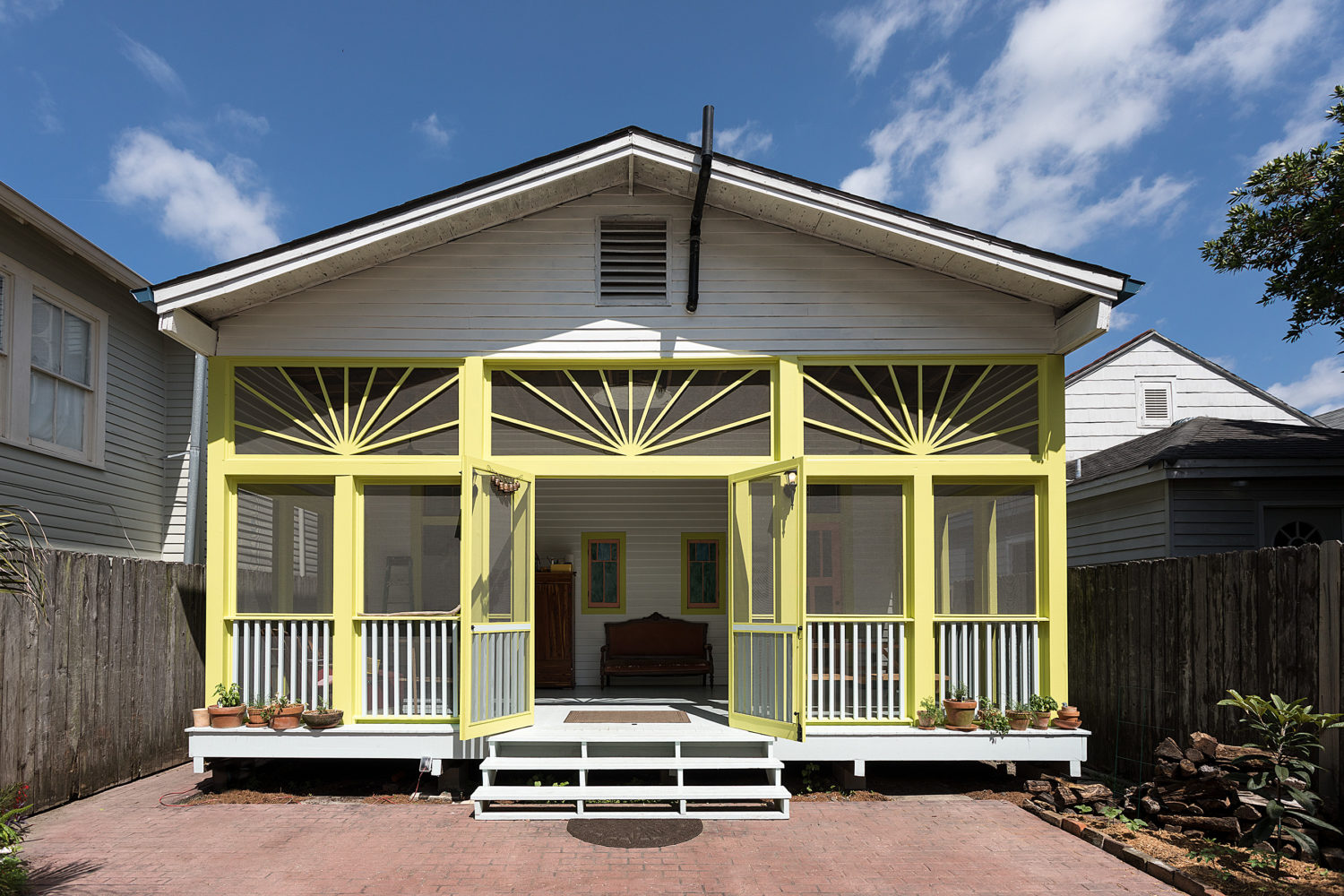
Tiny Cottage in New Orleans, LA
“He waved, and I waved back,” Mellencamp said in an interview with Rolling Stone. “That's how 'Pink Houses' started.”.[33][34] In Bruce Springsteen's song "We Take Care of Our Own", from the album Wrecking Ball, he refers to shotgun houses, singing "We take care of our own, from the shotgun shack to the Super Dome". Springsteen also references "shotgun shack" in "Reason to Believe" from his 1982 album Nebraska, with the line, "In a whitewashed shotgun shack, an old man passes away / they take his body to the graveyard, and over him, they pray." Fans of the Kentucky Derby can end their quest for the perfect accommodations near the race track by taking up shelter at this Germantown residence.
Later variations of shotgun homes include “double barrel shotguns,” which are single buildings made up of two identical shotgun houses sharing a center wall, but set in reverse layouts. Two-story shotguns are unheard of, but some have a camelback addition—or a partial second story on the back of the house. Despite their size, the rooms in shotgun houses are surprisingly large, usually around 14 square feet (1.3 square meters). A modified version of the shotgun house, the double shotgun, was later developed for larger families and can serve as a duplex for more than one family. These homes bear the same style as the traditional shotgun house, except that the double shotgun is essentially two single shotgun homes fused together side by side. They share a single roof and doors that connect the adjoining parallel rooms.
Inhabitants of shotgun houses also live in close contact with each other, since the lack of hallways requires residents to pass through each other’s rooms. Shotgun house, narrow house prevalent in African American communities in New Orleans and other areas of the southern United States, although the term has come to be used for such houses regardless of location. Shotgun houses generally consist of a gabled front porch and two or more rooms laid out in a straight line. Shotgun houses may have derived their name from that room format, as it was sometimes said that a bullet shot from the front door would pass through the house without hitting anything and exit through the back door. They represent a unique African American contribution to architecture in the United States.
Be that as it may, the 1,600-square-foot stunner was built only last year, and boasts the modern amenities to prove it. Indoors, an inviting living room opens onto a modern kitchen, complete with sleek stainless steel appliances—the perfect place to cook up Bayou cuisine. The sea-green exterior of this 1900s-era shotgun home in New Orleans’ Bywater North neighborhood is proof of the home’s playful personality. Brand-new tile bathroom floors work with the original refinished hardwood floors to refresh the home while preserving its historical appeal.
Developed with affordability in mind, shotgun houses kept a deliberately small and narrow footprint in an attempt to fit as many homes as possible onto a single block. The communities of shotgun houses in New Orleans are attributed to the Haitian and West African refugees, immigrants, and slaves who called the city home in the 1800s. This style of linear construction was common in West Africa and later in Haiti. Among these local design quirks is an adorably petite home style called the Shotgun house. Originally popularized in New Orleans and other parts of Louisiana during the 1800s, shotgun homes are diminutive dwellings that often span only about 12 feet wide—making them the original tiny home. Learn more about this small but mighty southern home style below—plus how to evoke a similar look on your own property.
After the Haitian rebellion that began in 1791 and culminated in Haiti’s independence in 1804, many Haitians relocated to the southern United States, either freely or as slaves brought by plantation owners fleeing Haiti. In Louisiana and other southern states, the cailles evolved into shotgun houses made from wood, rather than stucco, but retained the narrow structure and gabled entrances. Shotgun houses first appeared in the early 19th century and peaked in popularity at the beginning of the 20th century.



No comments:
Post a Comment